Musarambagh, Hyderabad - 500036

February 1, 2026 · 11 MIN
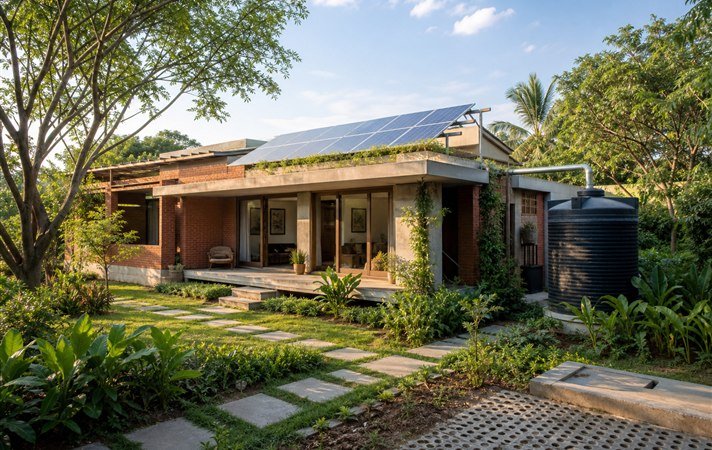
Sustainability is not a buzzword for SK Construction Experts—it is embedded in our tagline: Building the Future, Preserving the Environment. In Hyderabad's climate, where summers are long and intense and water stress appears in many layouts each year, thoughtful design and construction can significantly reduce energy use, water waste, and environmental impact over a building's lifetime. This article outlines practical sustainable building practices for homeowners—not abstract ideals, but choices you can make during design and construction with clear benefits.
The greenest kilowatt-hour is the one you never consume. Orientation matters: minimising west-facing glazing reduces afternoon heat gain; north and east openings can bring daylight with less thermal load. Courtyards, light wells, and stack ventilation help air move without running air conditioning constantly. Overhangs and shading devices—horizontal chajjas, vertical fins, or traditional jaali screens—cut direct sun before it hits the wall.
Hyderabad's diurnal temperature swing allows night flushing in many seasons: cool night air ventilates the home, pre-cooling thermal mass in floors and walls before the next day. Design should enable cross-ventilation by aligning openings on opposite walls where security and privacy allow. High ceilings in common areas improve comfort perception without extra mechanical cooling.
After orientation, the building envelope determines how hard your cooling system works. AAC blocks, cavity walls, or external insulation systems reduce heat transfer compared to single-leaf thin walls. Roofs receive the most solar exposure; reflective coatings, weatherproof insulation boards, or tiled roof systems with air gaps improve comfort on the top floor dramatically.
Windows are weak points. Double glazing or good-quality UPVC frames with proper gaskets reduce heat and noise infiltration. Specify shading coefficients appropriate for each facade—what works on the north side may be wrong for west-facing bedrooms. Sealing gaps during installation prevents dust, insects, and conditioned air leakage.
Water management is central to sustainable homes in Hyderabad. Size sumps and overhead tanks for realistic daily use, guest peaks, and garden irrigation—not oversized tanks that stagnate or undersized ones that run dry. Plumbing layouts should minimise pipe runs to hot water points; shorter runs mean less waiting and less waste.
Rainwater harvesting from roof and paved areas into recharge pits or storage tanks is increasingly mandated and always sensible. Greywater from showers and laundry can irrigate landscaping when filtered and piped separately. Low-flow fixtures, dual-flush closets, and aerators on taps reduce consumption without sacrificing usability. During construction, protect existing borewells and avoid contaminating groundwater with careless chemical disposal on site.
LED lighting throughout is baseline today; also plan circuits so outdoor, common, and landscape lighting can be controlled efficiently. Electrical design should account for present and future loads: air conditioners, geysers, induction kitchens, home theatres, and EV chargers. Oversized panels and conduits cost little during construction compared to chasing walls later.
Rooftop solar photovoltaic systems are viable for many Hyderabad homes with sufficient terrace area and structural capacity. Even if you install panels after handover, request conduit routes, inverter space, and structural load notes during design. Net metering policies evolve; we help clients coordinate with DISCOM requirements when they choose to proceed.
Sustainable material choices favour durability and lower replacement cycles over cheap finishes that fail in a few years. Locally sourced stone and aggregates reduce transport emissions where quality permits. Low-VOC paints improve indoor air quality for occupants, especially children and elderly family members.
On site, responsible contractors segregate recyclable waste, minimise idle cement bags exposed to rain, and order quantities accurately to reduce surplus. Renovation projects especially benefit from retaining existing structure rather than demolition—preserving embodied carbon already invested in standing walls and foundations.
Renovating an older Hyderabad property can be greener than teardown-rebuild when the structure is sound. Retrofitting insulation where feasible, replacing single-pane windows, upgrading to efficient lighting and fixtures, and improving waterproofing extend life without new concrete pours. SK Construction Experts assesses structural viability honestly—sometimes reinforcement and retrofit beat new construction on cost and carbon.
When new build is necessary, optimise footprint. Smaller, well-designed homes outperform sprawling poorly planned ones on every environmental metric. Multifunctional rooms, built-in storage, and sensible circulation reduce wasted square footage you heat, cool, and clean.
Native and drought-tolerant planting reduces irrigation demand after establishment. Permeable paving in parking areas allows rainwater infiltration compared to fully paved yards that overload storm drains. Trees on the west side provide living shading as they mature—plan placement to avoid future conflict with foundations or overhead lines.
Buildings perform only as well as occupants operate them. Programmable thermostats, timer switches for common areas, and awareness of peak tariff hours reduce bills. Maintenance—cleaning AC filters, fixing leaks promptly, servicing solar inverters—keeps designed performance from degrading. We provide handover notes on systems so your household staff and family understand how sumps, pumps, and harvesting valves work.
Not every client needs the same sustainability package. We help you prioritise: a tight budget might focus on orientation, LED, water fixtures, and solar readiness; a larger budget might add insulation, premium windows, and immediate solar installation. From package selection to material upgrades, SK Construction Experts helps clients make choices that balance upfront cost, comfort, and long-term environmental responsibility.
Sustainability gains are measurable when you track them. Compare electricity bills before and after envelope upgrades; monitor water meter readings after installing low-flow fixtures and harvesting systems. Many clients report noticeably cooler top floors after roof insulation and reflective coatings alone—reducing AC runtime even before solar panels generate offset power. We document baseline assumptions during design so you can evaluate return on investment for each upgrade you select.
Sustainable building in Hyderabad is not a luxury for eco-activists alone—it is sound economics over decades of ownership. Contact our team to discuss how your upcoming project can incorporate these practices from the first sketch through handover, building a home that serves your family and the city we share.