Musarambagh, Hyderabad - 500036

February 18, 2026 · 10 MIN
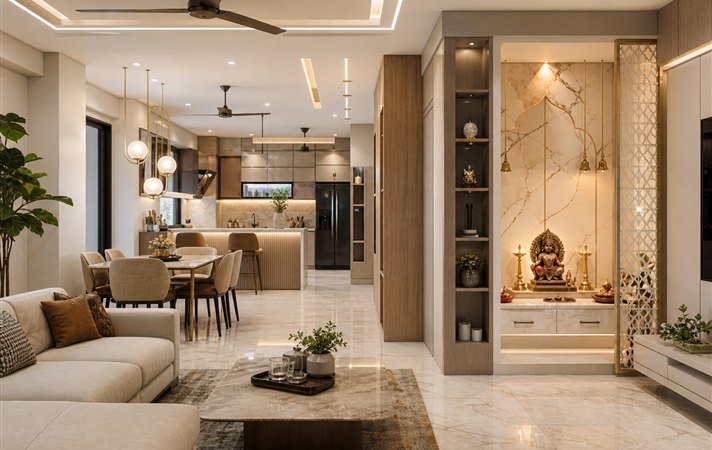
Interior design in Hyderabad evolves quickly as lifestyles, work patterns, and global aesthetics influence local taste—yet regional priorities remain distinct. Puja spaces, heat-aware material choices, and layouts that support multigenerational living still anchor most projects. As we move through 2026, several trends shape how homeowners and designers approach residential interiors across the city. SK Construction Experts' interior team curates spaces that reflect individual taste while staying practical for daily life. Here is what we see defining Hyderabad homes this year.
The stark all-white, all-grey minimalist look is softening. Hyderabad clients increasingly favour warm minimalism: neutral palettes with beige, sand, terracotta, and olive undertones; natural textures in linen, jute, and wood; and fewer but better objects on display. The goal is calm without feeling clinical—important in homes where festivals, family gatherings, and daily cooking bring colour and activity.
Wall treatments include limewash effects, subtle microcement accents, and panelling in teak or oak veneers rather than high-gloss laminates everywhere. This approach ages well and photographs beautifully without demanding constant perfection from busy households.
Open kitchens flowing into dining and living areas remain popular for social hosting and parental supervision of children. Yet pure open plan can struggle with Indian cooking aromas and noise. The trend is zoned open plan: sliding glass or crittall-style partitions, partial walls, or raised counters that define kitchen boundaries while preserving sightlines. Dedicated utility and prep areas keep clutter out of sight.
Parallel demand exists for pocket doors and acoustic separation to home offices or guest suites—reflecting hybrid work that is now permanent for many Hyderabad professionals. Flex rooms that serve as study, yoga space, or spare bedroom use murphy beds or modular furniture to switch roles quickly.
Puja rooms are non-negotiable for many families and are no longer afterthought corners. Trends include integrated niches with backlighting, marble or granite flooring with brass accents, carved doors or jaali panels, and ventilation planned for lamp and incense use. Location respects Vastu preferences where clients desire—often northeast—with natural light where possible without exposing idols to harsh direct sun.
Storage for lamps, books, and festival supplies is built in to avoid cluttered adjacent corridors. Our designers coordinate ceiling height, chandelier clearance, and electrical points for music systems discreetly.
Kitchen interiors balance heavy use with aesthetics. Quartz and sintered stone countertops dominate for durability; some clients mix materials—wood on islands, stone on perimeter counters. Tall units maximise storage; internal organisers for masala, vessels, and appliances reduce chaos. Chimneys sized correctly for hob type and ducting routed properly matter more than brand prestige alone.
Breakfast counters, bar seating, and pantry rooms appear frequently in larger homes. Secondary wet kitchens or veg prep areas remain common where traditional cooking volumes are high. Matte finishes on shutters hide fingerprints better than high gloss in active kitchens.
Master bathrooms trend toward spa-like calm: large format tiles, walk-in showers with linear drains, niches for toiletries, and warm lighting. Guest baths stay durable and easy to maintain. Anti-skid flooring, concealed cisterns, and quality hardware reduce long-term headaches. Ventilation—exhaust fans and windows—is specified to combat humidity-related mould in monsoon months.
Urban plots are expensive; every square foot must work. Floor-to-ceiling wardrobes, under-stair storage, bench seating with drawers, and platform beds with hydraulic storage are standard requests. Walk-in closets appear in master suites where area allows. Foyer storage for footwear, bags, and delivery packages prevents living rooms from becoming dumping grounds.
Single ceiling fixtures in every room feel dated. Layered lighting—ambient, task, accent—defines zones. Cove lighting, picture lights on art, and pendant clusters over dining tables create atmosphere. Dimmers and scene controls, including app-based systems in premium homes, let one space shift from bright homework hour to dinner party warmth. Warm colour temperatures (2700K–3000K) dominate living and bedrooms; slightly cooler temps in kitchens and studies aid focus.
Clients celebrate local craft: handloom textiles, bidri or metal accents, Kalamkari or block-print panels as feature walls, and furniture from Hyderabad artisans mixed with contemporary pieces. Sustainability awareness nudges choices toward solid wood over disposable particleboard in key rooms, and toward repairable hardware.
Rooftops and balconies become usable rooms with weather-resistant furniture, pergolas, outdoor tiles, and kitchenettes for entertaining. Shade structures make terraces viable for more months of the year. Planters with drip irrigation suit low-maintenance greenery. Safety railings and waterproofing must be engineered—not improvised after furniture arrives.
Finally, the strongest trend is personalisation. Clients resist looking identical to showroom displays. Our interior design team starts with how you live: morning routines, festival hosting, elder accessibility, pet needs, and collection display. Whether you prefer minimalist modern or traditional accents, we tailor lighting, hardware, and finishes to you—from the moment you step into the foyer to the last light switched off at night.
Acoustic comfort is rising on client wish lists: thicker doors to bedrooms, rugs in high-traffic corridors, and curtains with lining to dampen street noise in urban plots. Colour drenching—using one hue across walls, trim, and selected furniture—creates cohesive rooms without busy pattern mixing. Pair bold accent walls with restrained adjoining spaces so Hyderabad's bright natural light does not overwhelm interiors by afternoon.
For children's rooms, chalkboard paint zones, grow-with-me furniture, and durable laminates handle real use. Elder-friendly interiors favour consistent floor levels, grab-bar rough-in in bathrooms, and motion-sensor night lighting along circulation paths—details that cost little during construction but matter enormously for safety and dignity.
Finally, invest in quality hinges, drawer runners, and soft-close mechanisms where daily touch matters. Cheap hardware undermines premium finishes within a year; clients who allocate budget here report higher satisfaction than those who upgrade only visible surfaces.
Ready to shape your 2026 interiors? Contact SK Construction Experts to discuss turnkey construction with integrated interior design, or standalone finishing for your newly built shell. We bring Hyderabad's current trends together with timeless comfort your family will feel every day.